A multidisciplinary research centre advancing climate knowledge, policy innovation, and sustainable development across Asia and beyond — established 2019.
Dealing with the challenges of today requires problem-solvers who bring different perspectives and are willing to take risks. Centre for Asian Climate and Environmental Policy Studies: CACEPS emerged out of a pursuit to inspire and support the community, and a desire for actions to speak louder than words.
Established in 2019 (migrated from Malaysia), we are an organization driven by progressive ideas, bold actions, and a strong foundation of support. We serve as a reference point for conducting policy research and consultation on the impacts of policy strategy for Asian climate and environmental issues.
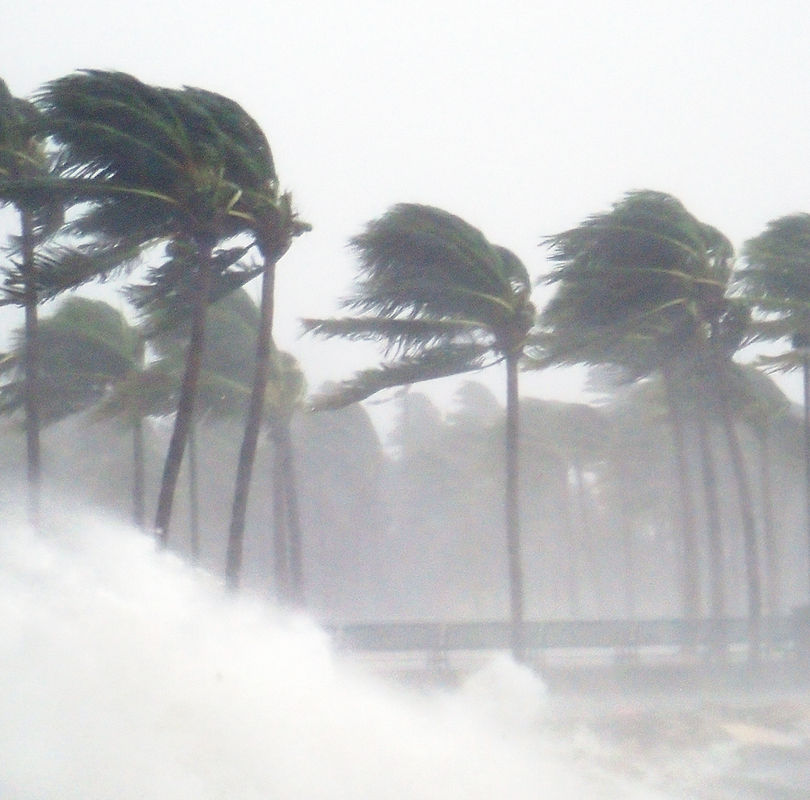
CACEPS acts as a point of reference for policy research and consultation on the impacts of policy strategy in Canada for Asian climate and environmental policy, future strategy for climate change debates, and dissemination of Canadian challenges and future policies.
CACEPS supports Canadian policy makers, researchers, and scholars toward high-quality research, publications, and global networks that advance sustainable development and climate change solutions.
With our organization's mission always in mind, we strive to find new strategies for dealing with climate challenges. Advocacy is something we take very seriously, and our team works every day to make a positive impact.
We are dedicated to stepping up efforts in addressing climate issues. Through cooperation and community empowerment, we facilitate progress and invite stakeholders to learn more and lend their support.
We promote great opportunities for researchers and scholars in need. With access to the right resources, people can become empowered by their abilities and gain the confidence to fulfill their academic potential.
Multidisciplinary research spanning climate policy, green economics, agriculture, and sustainability — providing a reference point for policymakers and scholars across Asia and Canada.
The impacts of climate change and global warming can be felt far beyond the location where the event occurs, creating conflicts of interest. Direct impacts include destruction of natural resources and the agro-economy, loss of life, human resettlement and migration, and damage to infrastructure and the environment. This centre researches risk, vulnerability, resource depletion, and possible mitigation and adaptation solutions as a point of reference for country-specific policy efforts.
Paradigm shifting in higher education (HE) has made society realize that every profession demands competent professionals to have a balanced development across all educational sectors. The issue of climate change is yet to be perceived either as an economic or social developmental phenomenon. Consequently, HE provides less attention to climate change. This centre explores how HE can discover a concrete and substantial way to contribute to handling climate change.
The dialogue on low-carbon green growth and progress towards long-run sustainable economic development has been increasingly emphasized to address climate change. The range of timescales, consequences, perspectives and methods are still open to dispute. This centre serves as a reference point for country-specific green-growth economic development and sustainability studies, since trade does not take place in a vacuum.
Food security, self-sufficiency, and sustainability issues related to climate change are a real concern for long-run visions. There is a clear relationship between climate change patterns and the agro-economy. Policymakers are worried about future consequences, making scenario-based policy modelling essential. Research activities will visualize alternative guidelines and potential paths that concerned policymakers could take in their planning strategies.
A new challenge in addressing climate change is how to involve dimensions of physical and social science in new modelling techniques. This challenge must account for economic development demands and effective climate change adaptation/mitigation. Multidisciplinary modelling must enable new effective techniques taking account of national agendas, foreign climate policy, future country-specific road-maps, market preferences, and technology changes — since climate change is a long-term matter.
A global network of scholars, researchers, and policy experts committed to advancing climate and environmental knowledge across Asia and beyond.


CACEPS welcomes scholars, researchers, and policy professionals passionate about advancing climate and environmental solutions.
Dealing with the challenges of today requires problem-solvers who bring different perspectives and are willing to take risks. CACEPS emerged out of a pursuit to inspire and support the community, and a desire for actions to speak louder than words.
We are an organization driven by progressive ideas, bold actions, and a strong foundation of support. We welcome applications from PhD students, early-career researchers, and senior academics who share our commitment to climate and environmental policy research.
We offer associate and senior fellow positions for researchers with demonstrated expertise in climate policy, environmental economics, sustainability, and related fields. Fellows contribute to our research agenda and benefit from our global network of scholars.
To enquire about fellowship opportunities, please contact us.
Seeking scholars with expertise in climate policy, environmental economics, or sustainable development. PhD required.
Supporting researchers through manuscript preparation, journal selection, peer review, and post-submission processes.
Graduate students interested in gaining experience in Asian climate and environmental policy research and analysis.
Complete academic research and supporting services ranging from professional manuscript editing to full publication support for authors, scholars, students, and institutions worldwide.
Whether you are a PhD student or a senior researcher, time is a precious commodity. Getting a paper published takes months, and sometimes, even years. With our editorial support services, you can consult experts for guidance at all stages of the publication process.
Our expert panelists will review your paper and provide constructive comments so that you can improve your manuscript before submission to the journal of your choice. We bridge the communication gap by sharing knowledge and resources, working hard to get each manuscript published on international platforms.
CACEPS offers complete academic research and supporting services ranging from professional manuscript editing and publication support to authors, research scholars, students, publishers, universities, start-ups, and corporates.
Professional editing for language, structure, clarity, and academic style to strengthen your manuscript before submission.
Expert guidance on identifying the most suitable international journals for your research topic and scope.
In-depth technical assessment of your paper's methodology, analysis, and scholarly contribution.
Assistance with responding to reviewer comments and managing the revision and resubmission process.
Consultation on research design, data analysis, and interpretation for climate and environmental studies.
Personalised academic coaching for PhD students and early-career researchers building their publication records.
Interested in our publication support services? Contact us to discuss your manuscript and research needs.
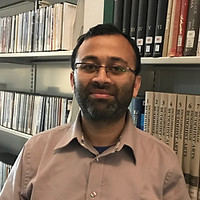
Advisor and Director of CACEPS — leading climate policy research, academic excellence, and international collaboration since 2019.
Dr. Abul Quasem Al-Amin is a prominent academic and researcher whose work sits at the intersection of environmental economics, climate change policy, and sustainable development. His interdisciplinary approach connects rigorous economic modelling with real-world policy impact across Southeast Asia, South Asia, and transitional economies worldwide. With active positions spanning Canada and Malaysia, he advises international bodies, shapes national policy discourse, and mentors the next generation of sustainability researchers. His contributions extend to UNDP and UNDESA, and as Malaysia's representative to the United Nations Framework Convention on Climate Change (UNFCCC), he stands at the forefront of global climate negotiations.
"Hope can, and will, heal the world. CACEPS was founded on the belief that rigorous research, bold collaboration, and evidence-based policy can drive meaningful change in how Asia and the world responds to climate and environmental challenges."
We welcome enquiries from researchers, policymakers, students, and anyone interested in climate and environmental policy in Asia.
For research collaborations, fellowship enquiries, publication support, or media requests, please reach out via the contact form or find us on social media.